
Business.com aims to help business owners make informed decisions to support and grow their companies. We research and recommend products and services suitable for various business types, investing thousands of hours each year in this process.
As a business, we need to generate revenue to sustain our content. We have financial relationships with some companies we cover, earning commissions when readers purchase from our partners or share information about their needs. These relationships do not dictate our advice and recommendations. Our editorial team independently evaluates and recommends products and services based on their research and expertise. Learn more about our process and partners here.


When choosing a retail point-of-sale (POS) system, businesses must evaluate features like inventory management, customer management and employee management. Lightspeed’s feature-rich POS software offers these functions and more, enabling retailers to generate advanced reports and leverage a wide range of integrations. It’s an excellent choice for small and midsize retailers with one or more locations, offering various pricing plans, advanced e-commerce and loyalty tools and multichannel sales data. Lightspeed also supports restaurants and golf courses with specialized functionality.
Lightspeed is our choice for the best POS system for retail businesses because it provides the tools needed to run a brick-and-mortar or e-commerce retail operation. We like that its three retail POS plans include inventory management tools, which can simplify what is typically a massive undertaking for retailers. When testing the software, we were also impressed by Lightspeed’s NuORDER Catalog, which includes product information for more than 5 million items. This can significantly reduce the time spent adding new inventory items to your POS system.
Other retail-specific features we appreciated include bulk uploads, low-stock alerts and e-commerce integrations. Retailers can also manage suppliers, place wholesale orders and sync purchase orders directly through the POS. We like that Lightspeed supports popular payment methods and offers 24/7 chat support across all three retail plans (with 24/7 phone support on the highest tier) — not all rival vendors are this accessible. Another huge perk is the one-on-one onboarding training Lightspeed provides at no extra cost.
We were also impressed by Lightspeed’s customer loyalty tools, employee management features, reporting functionality and extensive integrations. Retailers with multiple locations can manage inventory, sales and customer data across stores and sales channels from one platform. For these reasons and more, Lightspeed is the best POS system for businesses looking for a retail-oriented solution.
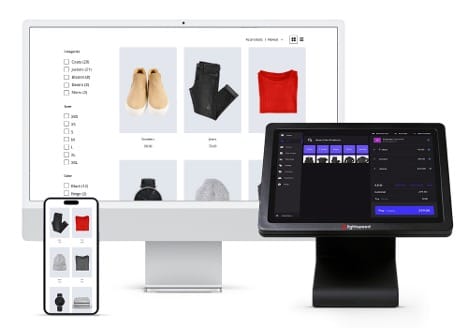
Lightspeed offers user-friendly software tailored to different business types, including retail stores, restaurants and golf courses. For retailers, the platform brings sales, inventory, customers, reporting and other day-to-day functions into one system.
When testing the platform, we were impressed by Lightspeed’s mobile-friendly interface, which allows retailers to manage their businesses on the go. The navigation is straightforward, with dedicated areas for selling, products, inventory, customers, reporting and setup. Lightspeed also offers numerous integrations with many of the best accounting software solutions, as well as e-commerce, marketing and other business applications.
Additionally, you and your team can customize the platform to fit different roles and workflows. After customizing the Lightspeed dashboard, it didn’t take us more than a few minutes to become familiar with its layout. We were impressed by how seamless Lightspeed made the implementation process and how helpful its guides are when users encounter issues.
We also appreciated the customization options available to retailers. Here are a few examples:
When we evaluated the best retail POS systems, Lightspeed immediately stood out for the essential features in its Basic package and the advanced e-commerce and loyalty tools in higher-tier plans. We were particularly impressed by the platform’s inventory, purchasing and supplier management capabilities, which go well beyond basic stock tracking. Here are the functions we found most valuable.
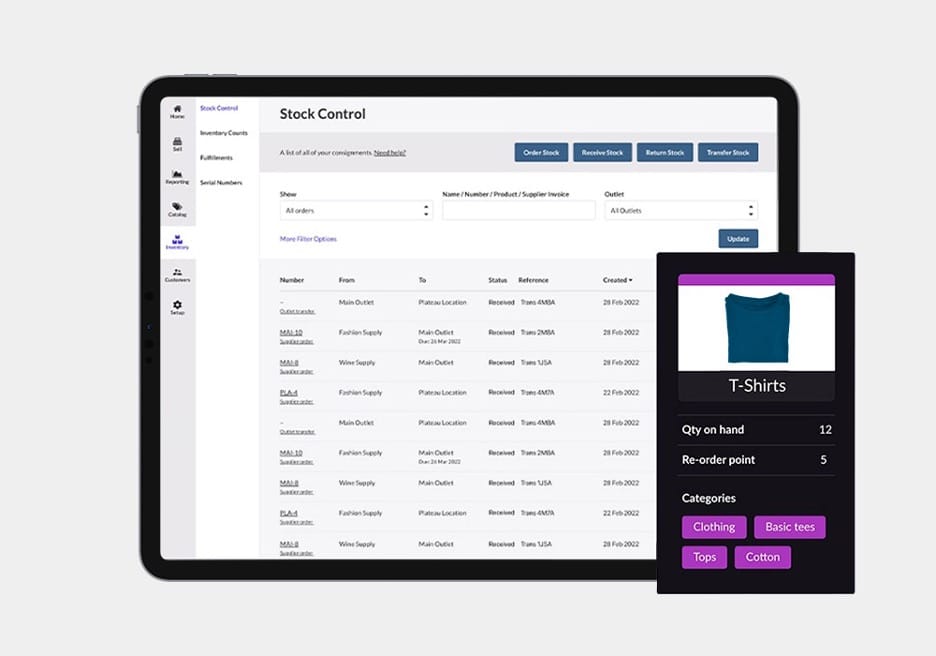
We were impressed by the range of inventory management tools Lightspeed gives retailers. The platform lets you track stock, bundle items, create product variations and manage vendors and inventory across multiple locations. Lightspeed also offers free templates for inventory tracking and purchase orders, which are handy if you still manage some inventory tasks outside the POS.
Lightspeed’s retail POS software includes the following inventory management features:
The platform also gives retailers access to the NuORDER Catalog, with more than 5 million products from over 4,000 brands and suppliers. Retailers can import product information such as images, descriptions, UPCs and pricing directly into the POS, reducing manual data entry when adding inventory.
We were also glad to see that every retail plan now includes Lightspeed Wholesale and the NuORDER Catalog, which let you browse supplier catalogs, place wholesale orders and sync those purchase orders straight into your POS. For inventory-heavy retailers, this closes a gap that usually requires a separate tool — something few competitors bundle at the entry tier.
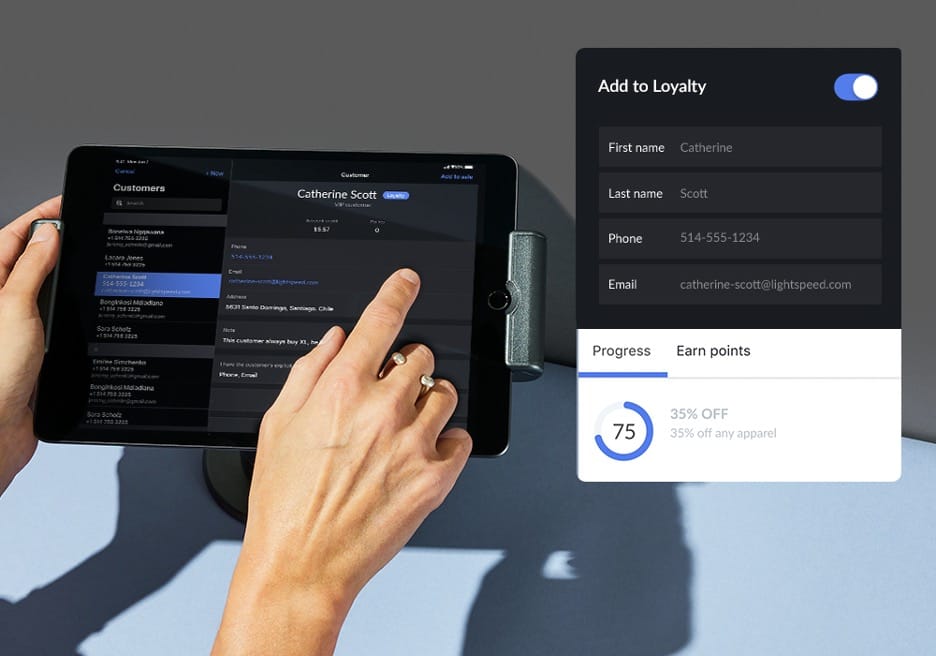
Lightspeed’s customer management tools can help retailers earn repeat business and build customer loyalty. Its built-in customer management features let you create customer profiles, track purchase histories and organize shoppers into groups. You can use this information to identify top customers, understand purchasing habits and offer more personalized discounts and recommendations.
Restaurants can also use Lightspeed’s customer management tools to track guest preferences, visit and payment histories and favorite menu items, helping staff personalize service and encourage repeat visits.
Lightspeed’s built-in loyalty program is available with the Core and Plus retail plans and works across in-store and online purchases. During our testing, we found the following loyalty functions particularly impressive:
Retailers that want more sophisticated loyalty and marketing tools can add Lightspeed Advanced Marketing. It expands the platform with customer segmentation, automated email campaigns, SMS marketing, birthday rewards, abandoned-cart campaigns and other personalized promotions.
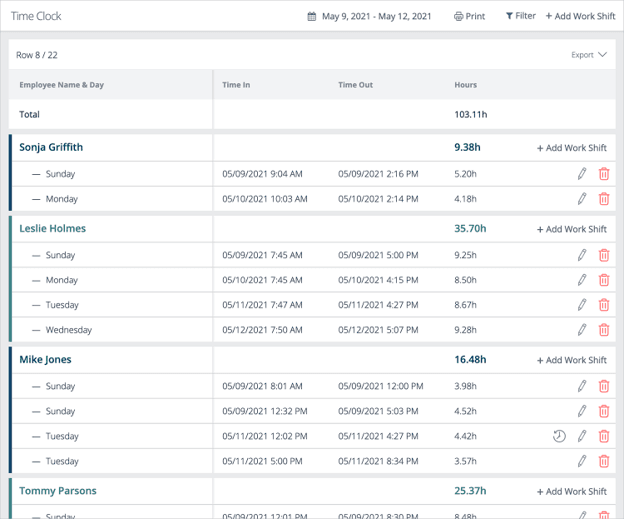
During our analysis, we found Lightspeed’s employee management features both helpful and insightful. For retail businesses, we liked that the POS system includes a built-in time clock and reporting tools that help managers track employee hours and sales performance. Retailers can also control what individual employees can access and attribute sales to specific staff members.
Here are some of the employee management capabilities that stood out to us:
Lightspeed’s restaurant-specific employee management options are also helpful. Restaurants can create staff roles and permissions, track employee sales and manage tips through the POS.
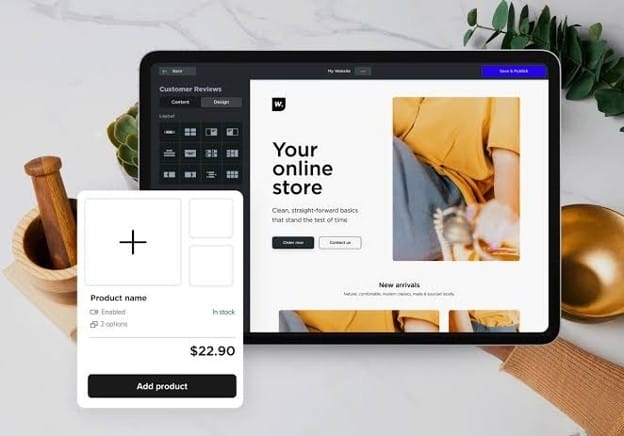
We were impressed by Lightspeed’s strong e-commerce support for retailers. The platform includes a code-free site builder for setting up an online store, or you can connect Lightspeed eCom to an existing website. Retailers can choose from more than 70 customizable themes, and sites automatically adapt to mobile devices to help improve your e-commerce marketing strategy.
Here are some of the advanced e-commerce capabilities that stood out to us:
We also love that Lightspeed Retail syncs online and in-store operations, giving retailers a centralized product catalog and synchronized inventory across sales channels. Additionally, you can sell through marketplaces and social selling platforms, including Amazon, eBay, Facebook, Instagram and TikTok, without managing inventory separately for each channel.
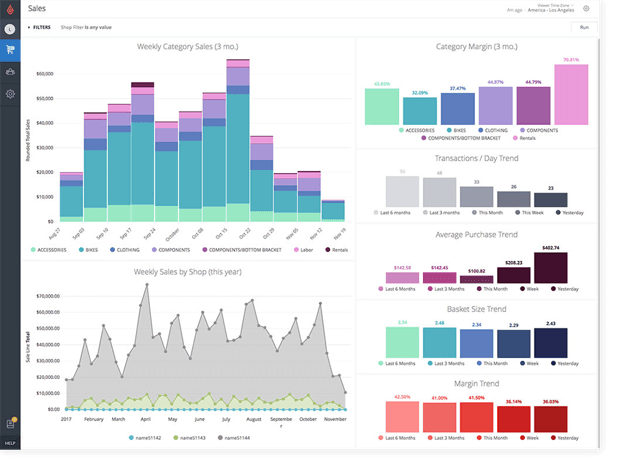
Lightspeed offers a strong collection of reporting and analytics tools to help retailers understand sales, inventory, customers and employee performance. All plans include basic reporting, while the Core and Plus plans add advanced POS reporting with more detailed sales and inventory insights and a customizable retail dashboard.
Here are some of the retail-focused reporting tools we found most useful:
Lightspeed’s Plus plan takes inventory analytics a step further with Insights, which includes demand forecasting and order recommendations. Retailers can use forecasting data to determine what and how much to reorder and create purchase orders from their reports.
Restaurant owners and managers can also use Lightspeed’s reporting tools to monitor sales, menu performance, labor and customer activity. This can help restaurants identify popular menu items, evaluate staff performance and spot trends that affect day-to-day operations.
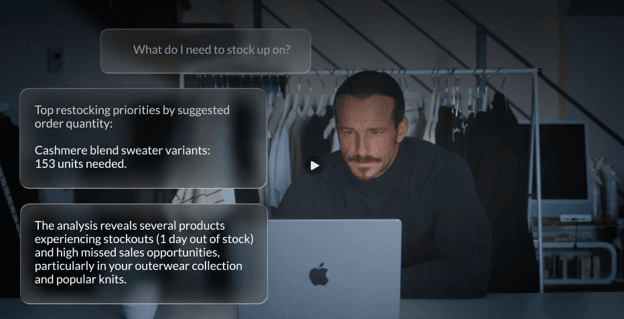
Lightspeed has added several AI tools since our last review. The most notable is Lightspeed AI, a conversational assistant available within Lightspeed Retail, Lightspeed Restaurant and NuORDER. Instead of digging through reports, you can ask questions about your business in plain language, such as which products sold best or which items are moving slowly, and get answers based on your own data. We like that this makes Lightspeed’s reporting tools more approachable for business owners who don’t want to spend time building and interpreting reports.
Retailers also get access to newer AI tools aimed at online selling and marketing. AI Showroom can turn your existing product catalog into an online showcase, while AI Blog helps e-commerce users generate, edit and publish blog content and optimize posts for search. These aren’t essential POS functions, but they could save small retail teams time when creating product pages and marketing content.
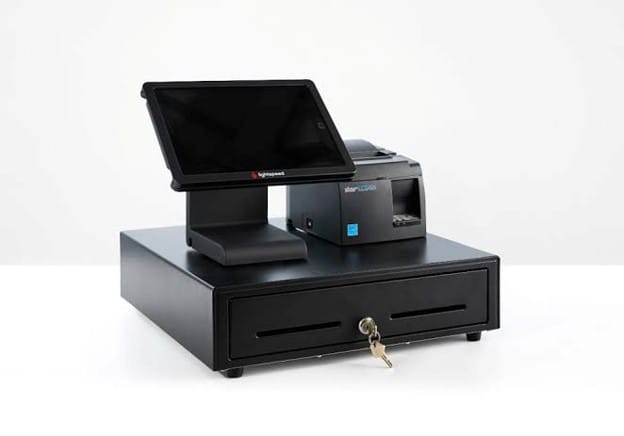
We like the flexibility of Lightspeed’s retail hardware options. You can run Retail POS on an iPad for a more mobile setup or use a Mac or Windows computer for a traditional countertop register. An iPad can also be removed from its stand when employees need to assist customers or complete inventory tasks around the store.
Lightspeed sells both hardware kits and individual components, so retailers can build a setup that fits their checkout environment. Here are some of the available options:
We also appreciate that retailers may be able to reuse some existing equipment instead of replacing their entire hardware setup. Lightspeed publishes a list of supported devices, including compatible printers, barcode scanners and cash drawers. We recommend checking that list before purchasing or reusing equipment, since Lightspeed only provides support for approved hardware.
Lightspeed integrates with a wide range of third-party business applications, allowing retailers to connect their POS with the tools they already use for accounting, e-commerce, marketing, employee management and inventory. We like that there are plenty of ready-made integrations, so most businesses won’t need to build their own connections.
Some of the integrations available for Lightspeed Retail include:
Retailers with more specialized needs have another option. The Plus plan includes API access, allowing businesses and developers to build custom integrations and workflows. Lightspeed gives examples such as connecting the POS with enterprise resource planning (ERP) software, accounting systems, business intelligence tools, fulfillment services and other sales channels.
The Plus plan also includes single sign-on (SSO), which is particularly useful for larger retailers that want to manage employee access through an existing identity provider.
Lightspeed maintains strong security and compliance measures across its platform. The company undergoes regular independent audits, and its Retail R-Series and X-Series products are covered by PCI DSS attestations of compliance and SOC 2 Type II audits. Lightspeed also uses strong encryption to protect data in transit and at rest.
We were also impressed by Lightspeed’s broader security practices. The company uses continuous monitoring, logging and alerts along with DDoS protection. Access to Lightspeed systems is centrally managed, requires multifactor authentication and follows the principle of least privilege, so employees are granted access based on what they need for their roles. Lightspeed also conducts vulnerability scans and uses third-party firms for annual internal and external penetration testing.
Lightspeed’s POS pricing differs by product (Retail, Restaurant or Golf). Here’s how it breaks down:
Lightspeed’s Retail POS plans include Lightspeed Payments, with a card-present payment processing rate of 2.6 percent plus $0.10 per transaction. Businesses that use an eligible third-party payment processor may pay an additional monthly fee.
We appreciate that Lightspeed offers a free trial of its retail POS, so you can test the platform against your own inventory before committing to an annual plan — something not every competitor we evaluated makes possible.
Here’s a look at Lightspeed’s retail plans:
Plan | Pricing | Features |
|---|---|---|
Basic | $89 per month (billed annually) $109 per month (billed monthly) |
|
Core | $149 per month (billed annually) $179 per month (billed monthly) | Everything in Basic, plus:
|
Plus | $289 per month (billed annually) $339 per month (billed monthly) | Everything in Core, plus:
|
A few other pricing details to keep in mind include the following:
Although we chose Lightspeed as the best POS system for retail businesses, it’s also considered among the best restaurant POS systems. In addition to the following monthly costs, you’ll also pay payment processing fees and hardware costs.
Plan | Pricing | Features |
|---|---|---|
Starter | $69 per month |
|
Essential | $189 per month | Everything in Starter, plus:
|
Premium | $399 per month | Everything in Essential, plus:
|
Enterprise | Custom pricing | Everything in Premium, plus:
|
Restaurants should budget separately for the Kitchen Display System, which Lightspeed bills at $30 per screen, per month, regardless of plan tier. For a kitchen running multiple stations, that add-on can meaningfully outpace what the headline plan price suggests — a wrinkle we’d like to see folded into the base plans.
You’ll need to contact Lightspeed for a personalized quote if you want to use its golf management software. The platform brings together a cloud-based tee sheet, retail and food-and-beverage POS systems, online booking, payments, inventory management and reporting. Golf facilities can also process sales directly from the tee sheet, manage pro shop inventory and sell products online.
Lightspeed’s in-house payment processing service, Lightspeed Payments, offers predictable flat-rate pricing and integrates directly with the POS system. As mentioned above, businesses that use an eligible third-party processor may pay an additional monthly fee.
Lightspeed Payments rates include:
Lightspeed says standard payouts typically reach your bank account within two business days, although bank delays and risk monitoring can affect the timing. Eligible merchants can also request instant payouts or schedule same-day payouts, with funds typically arriving within 30 minutes — even on weekends and holidays. We like the added flexibility for businesses that need faster access to their sales revenue, but there is an extra cost: instant payouts carry a fee of 1 percent to 1.75 percent, and same-day payouts cost 0.5 percent to 1.5 percent, depending on the region.
Lightspeed also charges a $15 chargeback fee and provides assistance throughout the dispute process.
We like the amount of help Lightspeed provides when you’re getting started. New customers receive one-on-one onboarding, and Lightspeed assigns an account manager who becomes your primary contact once you begin selling. The company also provides 24/7 support if you run into problems during or after setup.
Setup time varies. Lightspeed estimates about four weeks for Retail R-Series. It doesn’t give the same estimate for X-Series, but you’ll have guided onboarding sessions and setup checklists to help you get everything ready.
Lightspeed walks you through setting up your account, importing products and customer data, configuring payments and hardware and preparing employees to use the system. We particularly like X-Series’ Training Mode, which lets employees practice ringing up sales without affecting actual sales and reporting data.
There’s also plenty of help if you need it after onboarding. X-Series customers can book one-on-one training sessions, watch Lightspeed Academy videos and use the Retail Help Center, which includes detailed guidance on everything from inventory and payments to hardware and launching your POS.
Lightspeed offers several ways to get help, including live support and an extensive collection of self-service resources. We especially appreciate the 24/7 availability, which gives retailers somewhere to turn when problems arise outside normal business hours.
Here are the main support options:
We like that Lightspeed combines 24/7 support with plenty of resources for customers who would rather troubleshoot an issue themselves. That’s particularly valuable for retailers that operate evenings and weekends and can’t necessarily wait until the next business day for help.
While Lightspeed is an excellent POS system for retailers, there are a few drawbacks to consider:
To determine the best POS systems, we researched and analyzed dozens of options and gained hands-on experience through product videos, demos and personal testing. Our evaluation considered factors such as:
When determining the best POS system for retail businesses, we placed particular emphasis on inventory management, customer management and loyalty tools, employee management, e-commerce capabilities, reporting and integrations. We also considered how well each platform could support retailers with multiple locations and sales channels.
We recommend Lightspeed for …
We don’t recommend Lightspeed for …