Business.com aims to help business owners make informed decisions to support and grow their companies. We research and recommend products and services suitable for various business types, investing thousands of hours each year in this process.
As a business, we need to generate revenue to sustain our content. We have financial relationships with some companies we cover, earning commissions when readers purchase from our partners or share information about their needs. These relationships do not dictate our advice and recommendations. Our editorial team independently evaluates and recommends products and services based on their research and expertise. Learn more about our process and partners here.


Toast is one of the industry’s best restaurant point-of-sale (POS) systems. The company excels at online ordering and delivery, with extensive options that provide an excellent experience for restaurants and customers. These features can help restaurants capture more orders while making takeout and delivery easier to manage. Restaurants can customize online menus and set online orders to auto-fire to the kitchen, reducing the need for staff to manually enter orders. Guests will appreciate the customized experience, where they can save order information and convey special instructions.
Toast is a flexible POS system that can accommodate restaurants, bakeries and cafes of all sizes, whether they’re casual eateries or fine dining establishments. Restaurants can use Toast to accept payments, manage front- and back-of-house operations and enable online ordering.
It’s also a great bar POS system, with many built-in features bar owners will appreciate. For example, its QR-code bar service prevents employees from starting an order before receiving customer payment — a significant advantage in crowded environments where it’s easy to lose track of customers.
We were impressed by Toast’s broad selection of restaurant-specific hardware and helpful software add-ons, with a significantly greater breadth of features than most POS systems we’ve reviewed. Its loyalty programs and Order & Pay feature, which allows diners to place orders directly from their phones, particularly stood out to us.
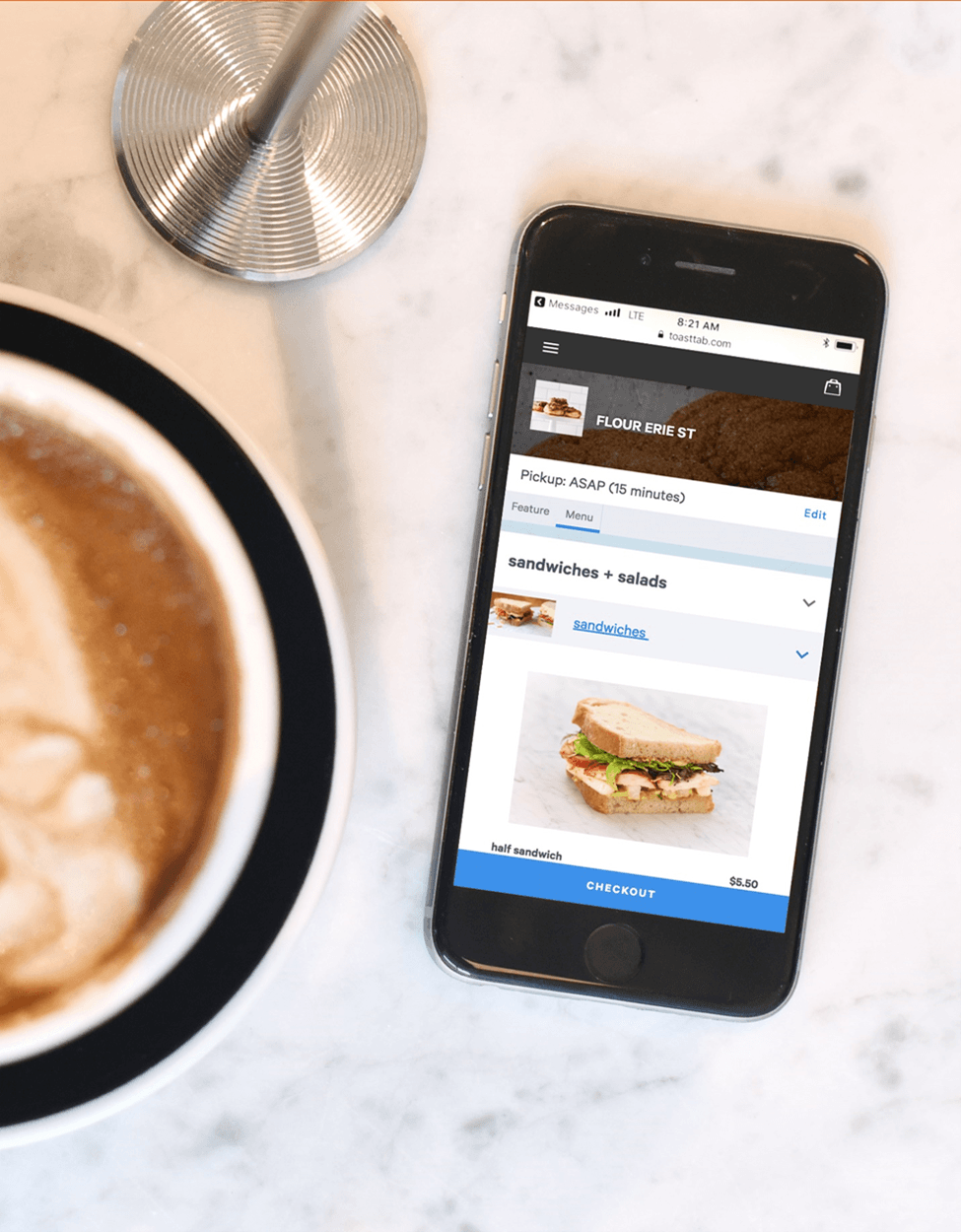
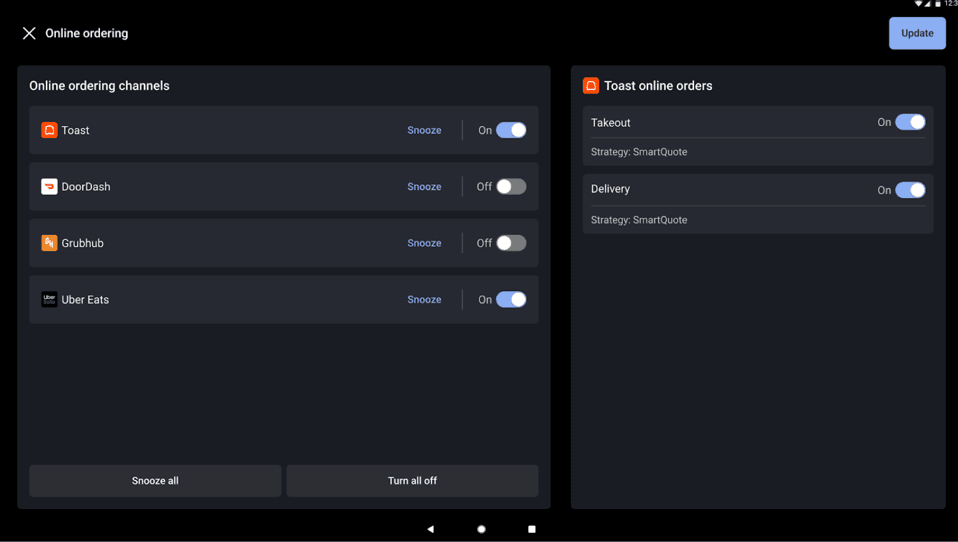
Where Toast excels the most, though, is online ordering. Guests can easily order and schedule meals online, save orders, pre-order meals and use express checkout for a seamless experience. Toast’s online ordering system is integrated directly with its POS software, with features designed to streamline things for staff when business gets busy. Restaurants can use order throttling to help manage demand and temporarily snooze online ordering when necessary. For these reasons, we chose Toast as the top restaurant POS system for online ordering.
Toast’s POS system is intuitive and easy to use, making it clear why more than 180,000 restaurant locations use the platform. These user-friendly features especially captured our attention throughout our research of the platform:
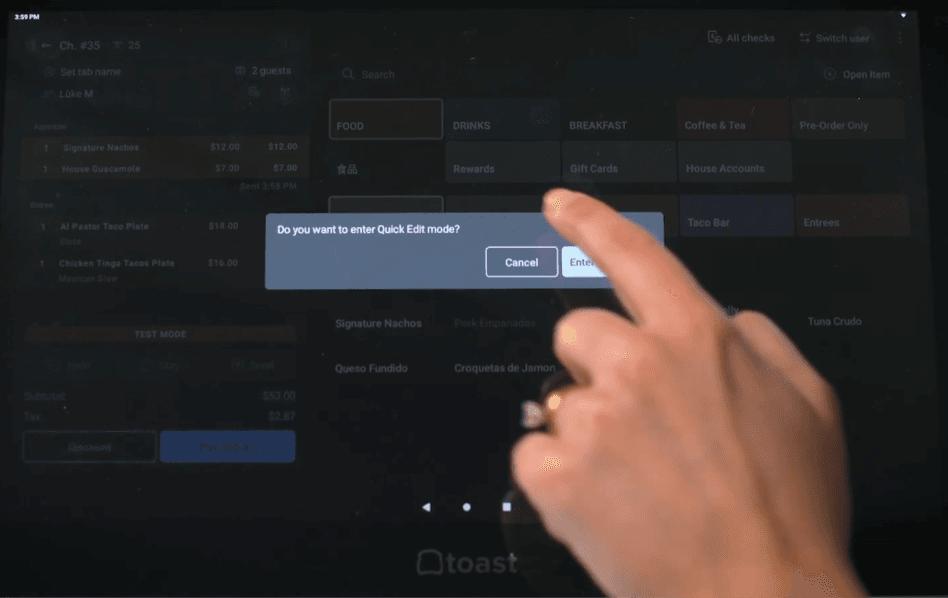
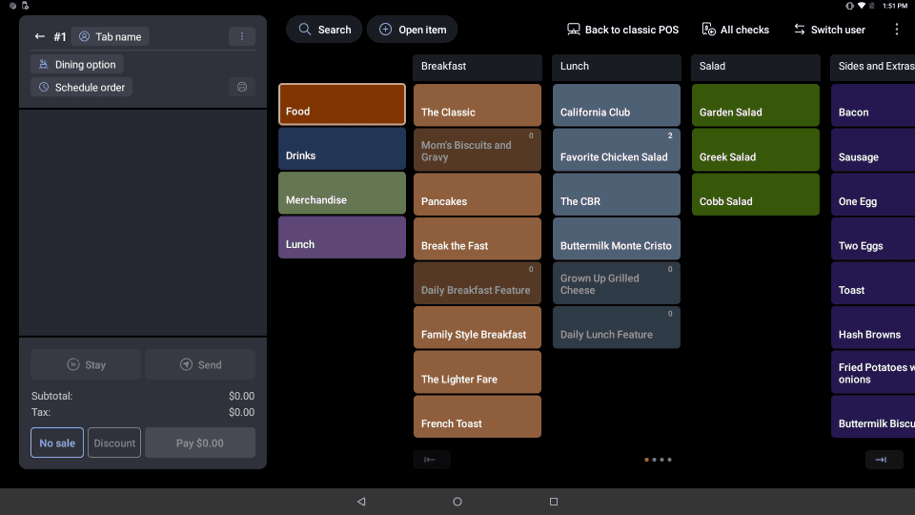
Toast’s all-in-one POS system provides everything needed to run a restaurant, including restaurant-grade hardware like handheld devices and self-serve kiosks. Because Toast is a cloud-based POS system, it’s possible to manage important restaurant functions from any location.
Here are some notable POS system features Toast offers.
We were impressed by Toast’s online ordering tools, which make things easier for both customers and restaurateurs. Here are some highlights:
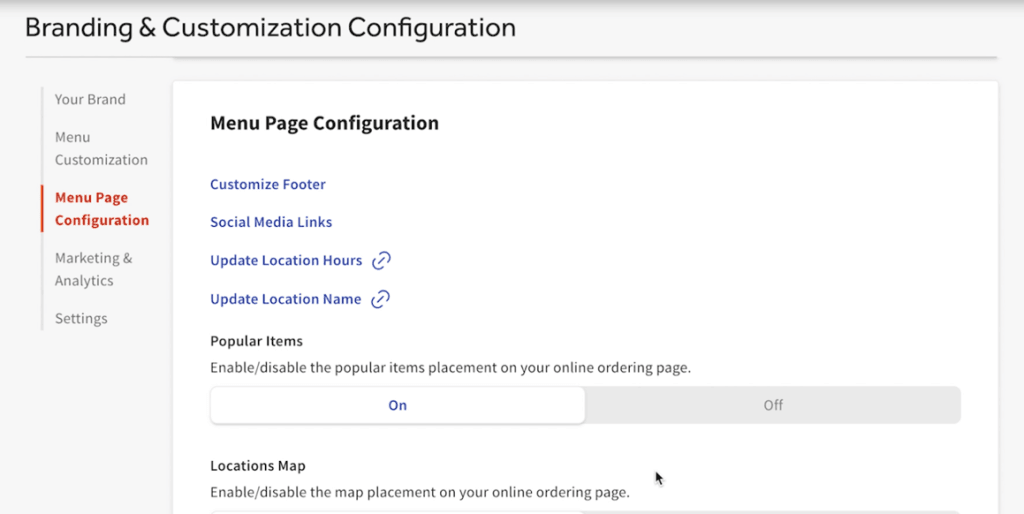
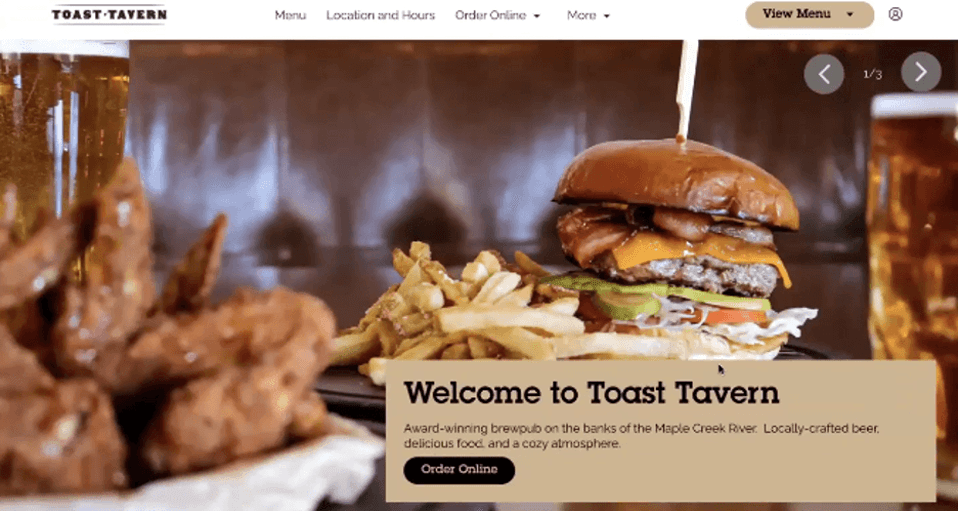
We really like the Toast Websites option, which incorporates Toast functions in one place, while making it easy for restaurants to add an SEO-friendly webpage to their domain. Reservations, online ordering, loyalty programs, marketing tools and a digital menu are all available to your customers online.
You won’t have to hire web developers or learn how to incorporate these functions. Toast Websites’ plug-and-play nature makes it quick and easy to produce a professional, clean-looking site that syncs seamlessly with your POS system. Like everything else with Toast, the interface is user-friendly and makes quick edits easy. For instance, if you need to make an update to your hours, all you have to do is navigate toward the bottom of the menu for the Quick Links feature and select Update Location Hours.
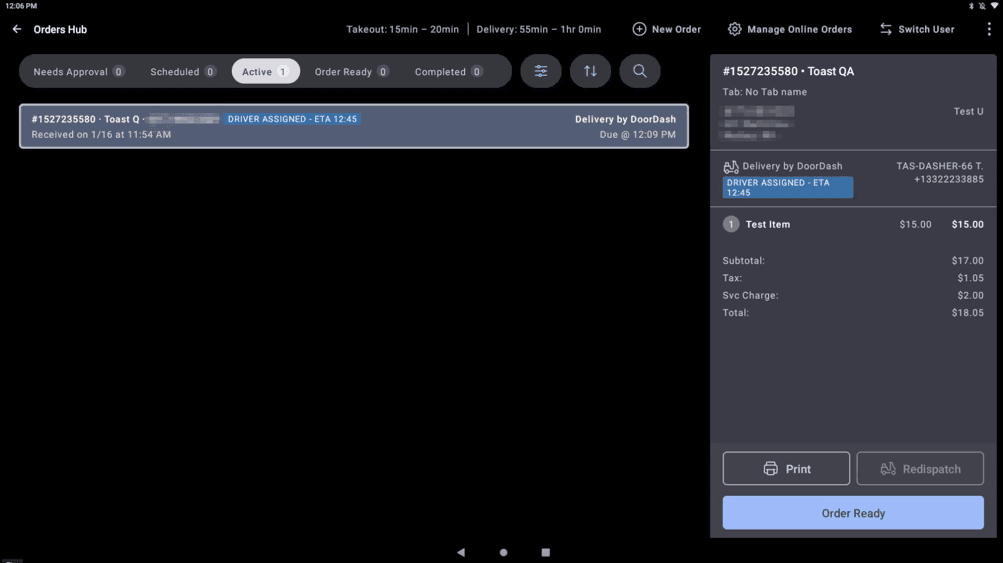
We like how Toast handles its delivery service. While delivery benefits customers, many restaurants are hesitant to hire delivery drivers or work with unreliable delivery partners. Instead of employing your own delivery drivers, you can rely on Toast Delivery Services to dispatch third-party drivers through Uber Direct or DoorDash Drive to fulfill online orders.
This feature is completely integrated with your POS, so Toast Delivery Services orders follow the same workflow as any other online order. You can adjust minimum ticket requirements for delivery and set up your fee structure so guests take on a portion of delivery costs. Flat delivery fees vary by provider and delivery distance.
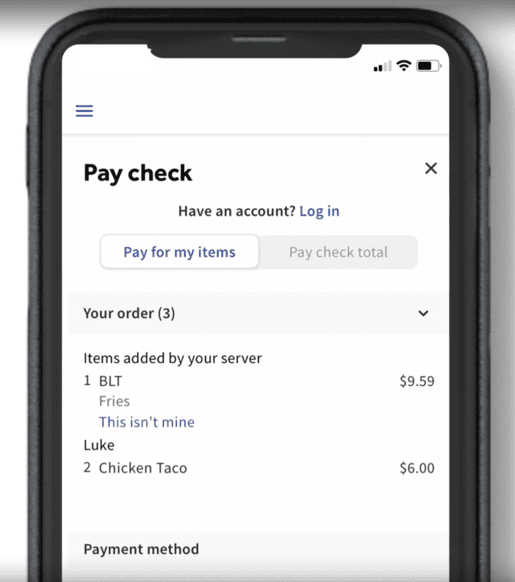
Toast Order & Pay helps restaurants operate more efficiently by minimizing the back-and-forth between guests and staff. This add-on service allows customers who prefer in-person dining to use a QR code to place new orders and pay for their food on their mobile devices while inside the restaurant.
Restaurants can print stickers or table tents to display these codes. Customers can access the menu, modify orders and pay for their meals from their phones while seated at their table. The group ordering function especially stood out to us, allowing groups to combine their orders in one group tab. Everything appears on one check while guests can pay individually on their phones, saving time and energy for both servers and guests. Plus, guests don’t have to wait for a server to deliver their menu or the check, thereby speeding up table turnover.
Toast’s available hardware is relatively standard for the industry but delivers what restaurants need. Here’s an overview:
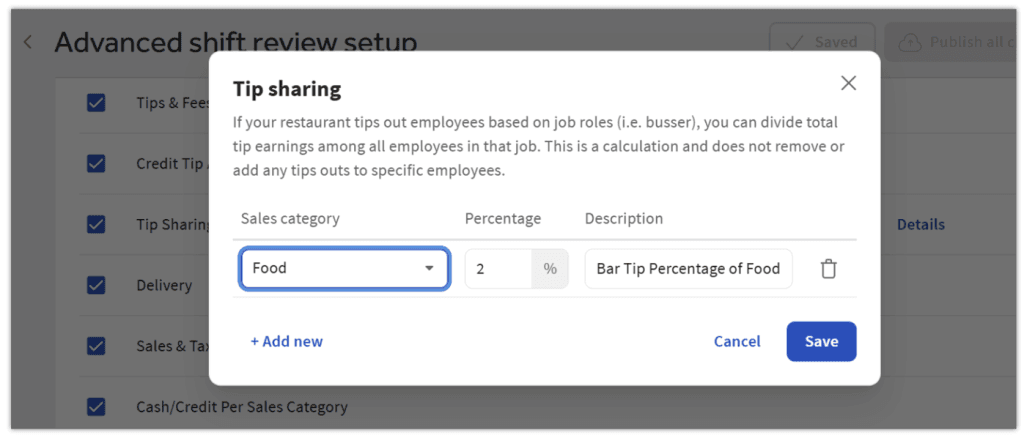
We like that Toast provides customized tipping options, including suggested tipping amounts. After navigating to the Customize Tip Percentages setting under the Tipping functionality, users have the option to display suggested tips as percentages, dollar amounts or a combination of both. Tips can be automatically calculated, while Toast Tips Manager provides additional options for pooling and distributing tips among restaurant staff.
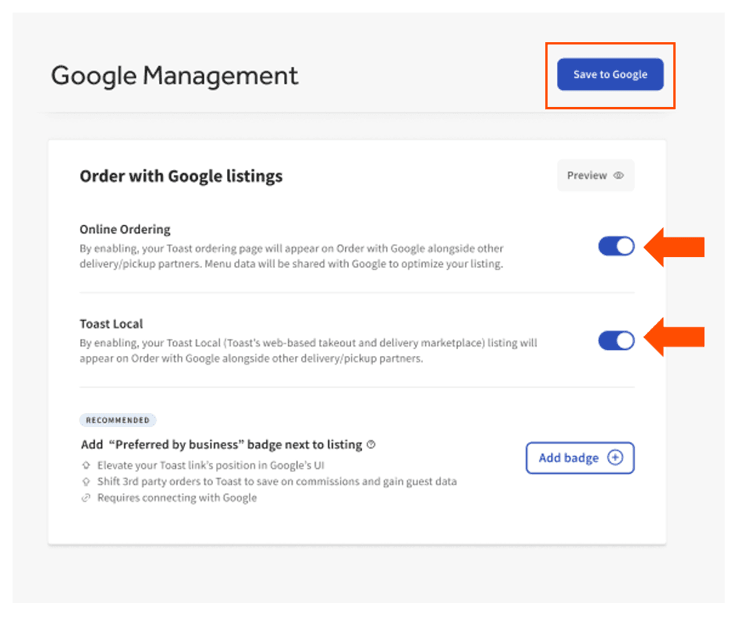
Toast’s Google partnership allows restaurants to tap into an additional ordering channel. Customers can search for restaurants on Google Search and Maps, find your eatery and access your Toast Online Ordering page to place an order. Toast is also integrated with Google’s Ask Maps AI feature, so when Google users ask for restaurant recommendations, Toast can surface restaurant menus and allow them to place a mobile order right then. This integration gives Toast a more extensive online presence and greater control over ordering channels.
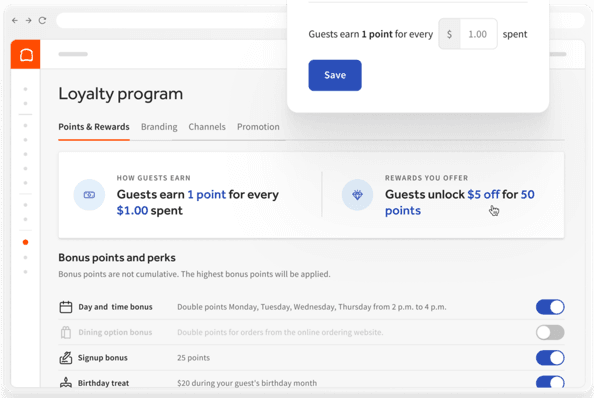
We like that you can use Toast to boost engagement, drive long-term customer loyalty and earn repeat business. The system’s flexible customer loyalty program integrates directly with your POS system. Customers can earn points on purchases made in your restaurant or online, and you can customize how customers earn and redeem their points. For example, you can offer birthday rewards and sign-up bonuses.
Customers can use the Toast Local app (available on Android and iOS) to track their progress toward a reward. Restaurants don’t need any additional hardware to implement this loyalty program.
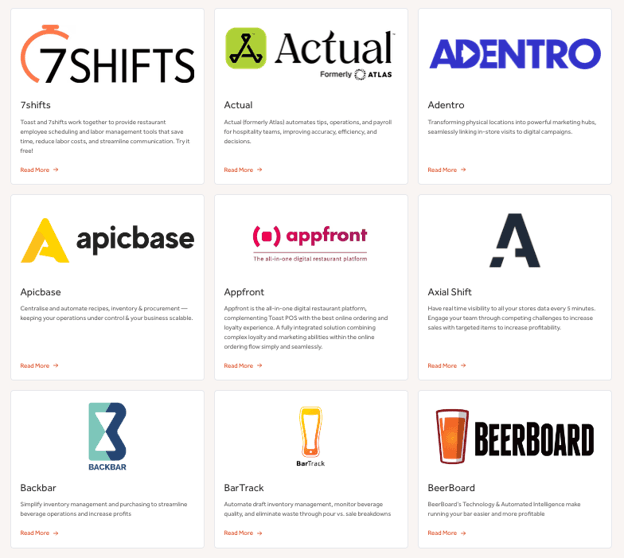
We like Toast’s ability to integrate with numerous third-party applications, including the most widely used restaurant software. Businesses can use integrations like 7shifts to streamline staff scheduling or manage inventory costs through WISK or MarketMan. With more than 200 technology integrations available, restaurants have plenty of options for connecting Toast with other software they use to run their business.
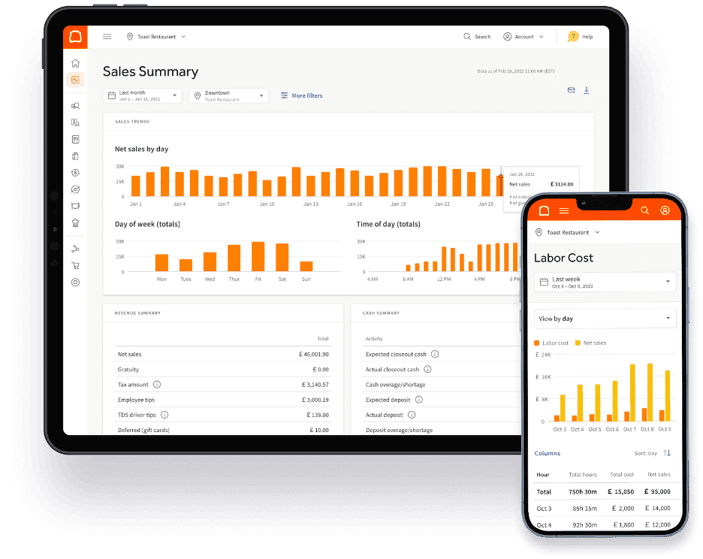
Toast’s detailed POS reports enhance its usability, giving insight into your restaurant’s sales and costs, including how these numbers have increased or decreased over time. This can help you find ways to make adjustments and increase your restaurant’s profits.
We were really struck by the detail in Toast’s reporting capabilities. With reports like Toast’s sales summary, restaurant owners can see sales trends by day of the week or time of day. They can also customize revenue summaries by date range or course and view data across multiple locations.
Sales breakdowns go even further with insight into dining options, service areas and discounts. Operators can view a menu breakdown of quantities of items and modifications, alongside frequent discounts and refunds. This information is invaluable for staff who are making menu changes and ordering decisions. We really liked that users can see which items sell the most, so it’s easier to identify which items could be cut to reduce costs. We could also see how bar sales performed compared to overall service and even view a breakdown of sales by individual servers. Reports can also be segmented by location or dining option.
Toast’s xtraCHEF inventory management feature also stood out in our research. We were able to see breakdowns of all ingredients by individual recipe, making it easier for restaurants to keep track of what they need to have on hand. We also appreciated that this feature allowed users to mark common allergens in each dish. Recipe instructions can be entered in English or a secondary language, making this information more accessible to different members of your team.
Toast offers flexible, customizable POS packages. There’s a monthly software subscription, optional hardware costs and add-on features to select. Here’s a breakdown:
Plan | Starting Price | Key Features |
|---|---|---|
Starter Kit | $0 |
|
Point of Sale | $69 per month | Everything in Starter Kit, plus:
|
Build Your Own | Custom pricing | Everything in Point of Sale, plus options for:
|
Additional pricing considerations include the following:
We like that Toast provides a dedicated onboarding consultant to help you get up and running. Several customer onboarding resources are also available online. A kickoff call with your consultant is one of the first steps. Toast says a typical remote or onsite implementation takes four to six weeks, with the process covering back-end and menu setup, staff training, hardware installation and go-live.
We appreciated the thoroughness offered in the onboarding kickoff call. The assigned consultant confirms your hardware needs and reviews your restaurant’s site readiness, including cabling, internet speeds and power sources, before installation. Before the call is over, they also make sure to set deadlines and deliverables for other important tasks like menu review, manager training, go-live readiness, hardware installation, activation and go-live support.
Each Toast plan includes 24/7 chat support, as well as phone support from 7 a.m. to 12 a.m. ET, seven days a week, ideal for restaurants operating early or late schedules. This level of support is fairly common in the POS industry, as many restaurants stay open late and may need assistance outside of standard business hours.
Users can also open and track support cases through Toast’s Support Center. We especially like that you can add comments or attachments to an existing case and chat with an agent in real time if an issue becomes urgent. You’ll also find a robust Toast Community, where users can get help online from industry peers.
Other online support resources include the Toast Central knowledge base, Toast Classroom training tools and live Office Hours.
Toast has much to offer restaurants, but we identified a few potential limitations during our evaluation.
We researched and analyzed dozens of highly rated solutions to identify the best POS systems on the market, with a special focus on maintaining and growing revenue. We looked at factors like pricing, contracts, hardware, platform compatibility, features, reports, payment processing, integrations, usability and customer support. We watched product videos and got hands-on experience with demos when possible. When choosing the best POS system for online ordering, we prioritized robust online ordering functionality, restaurant-specific features, integrations, delivery options and loyalty programs.
We recommend Toast for …
We don’t recommend Toast for …