
Business.com aims to help business owners make informed decisions to support and grow their companies. We research and recommend products and services suitable for various business types, investing thousands of hours each year in this process.
As a business, we need to generate revenue to sustain our content. We have financial relationships with some companies we cover, earning commissions when readers purchase from our partners or share information about their needs. These relationships do not dictate our advice and recommendations. Our editorial team independently evaluates and recommends products and services based on their research and expertise. Learn more about our process and partners here.


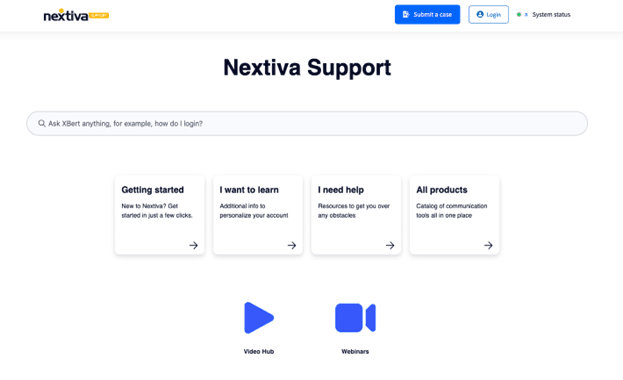
Finding a business phone system with reliable, easy-to-access customer support across multiple channels isn’t always easy. That’s why we were impressed with Nextiva. In our testing, this VoIP provider consistently delivered excellent customer service through phone, live chat and online resources, earning its place as the best business phone system for customer support. It also bundles digital communication tools with its calling plans, helping small businesses manage messaging, email and social interactions in one platform.
Reliable, knowledgeable support teams make a huge difference when problems inevitably arise. While many of the best business phone systems offer web chat and other support options, it’s not always easy to get help right away or reach the right person. We like that Nextiva offers 24/7 phone support along with live chat and online tools, and the agents we contacted were patient and clearly knew the platform. Whether you’re setting up new phones or adjusting call routing, they walk you through what to do instead of rushing you off the line.
Nextiva also offers email and ticket-based support with structured routing options. When submitting a request, you can choose your preferred contact method and category so it reaches the right team quickly. The company provides a robust help center and optional paid onboarding and customer success services for businesses that want more hands-on implementation support. Importantly, that support extends across the full platform, from core VoIP phone system calling features to messaging, video and customer communication tools, so you’re not left piecing together help from multiple vendors.
For all these reasons and more, we selected Nextiva as the best business phone system for customer support, especially for businesses that value responsive, multichannel assistance.
We found Nextiva easy to set up and use. Administrators can configure the business phone system through NextOS (Nextiva’s admin dashboard) using an onboarding wizard, and most tasks take just a few minutes. In our testing, we created teams, roles, voicemail greetings and extensions in under 15 minutes. We especially liked the built-in offline call forwarding option, which automatically routes calls to an external number during an outage and can be toggled on or off at any time.
The experience for individual users was just as straightforward. In the NextivaONE app (Nextiva’s desktop and mobile communications hub), employees can adjust preferences like where incoming call notifications appear, whether the window stays on top of other apps and whether it launches at startup. We also found it easy to import contacts into the built-in directory using Google or Microsoft integrations or a CSV file. Having contacts and conversations in one place helps cut down on app switching during the day and can improve productivity.
Though we found the platform to be very usable, some admin tasks, like setting up complicated call flows, took a bit of trial and error. We also ran into some issues with the mobile apps and softphone applications, such as missed calls not showing up in the logs (we ended up reinstalling the app to fix it). Not dealbreakers, but worth knowing if your team depends on mobile. Still, we liked that Nextiva’s support team was responsive and helped us work through the problems.
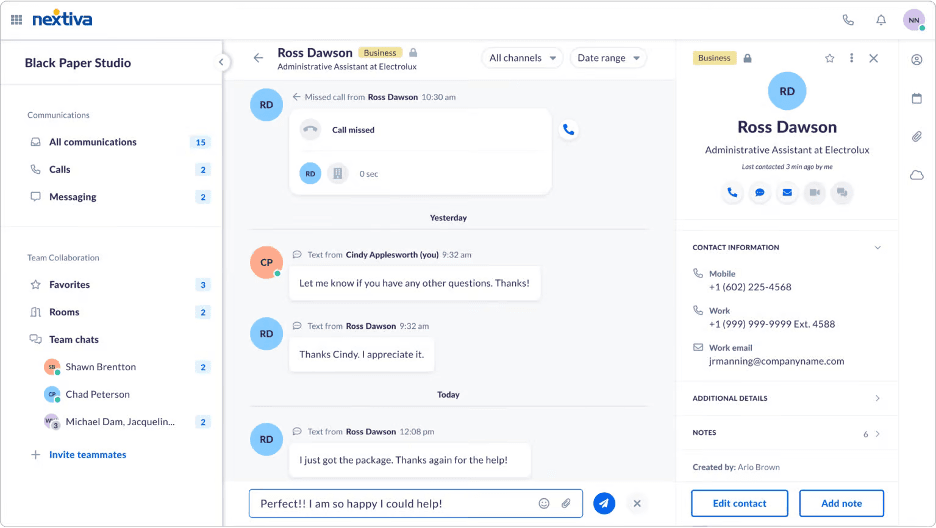
Nextiva’s customer experience (CX) platform combines business VoIP, brand management and contact center tools in one place. Here are the features that stood out most for small businesses.
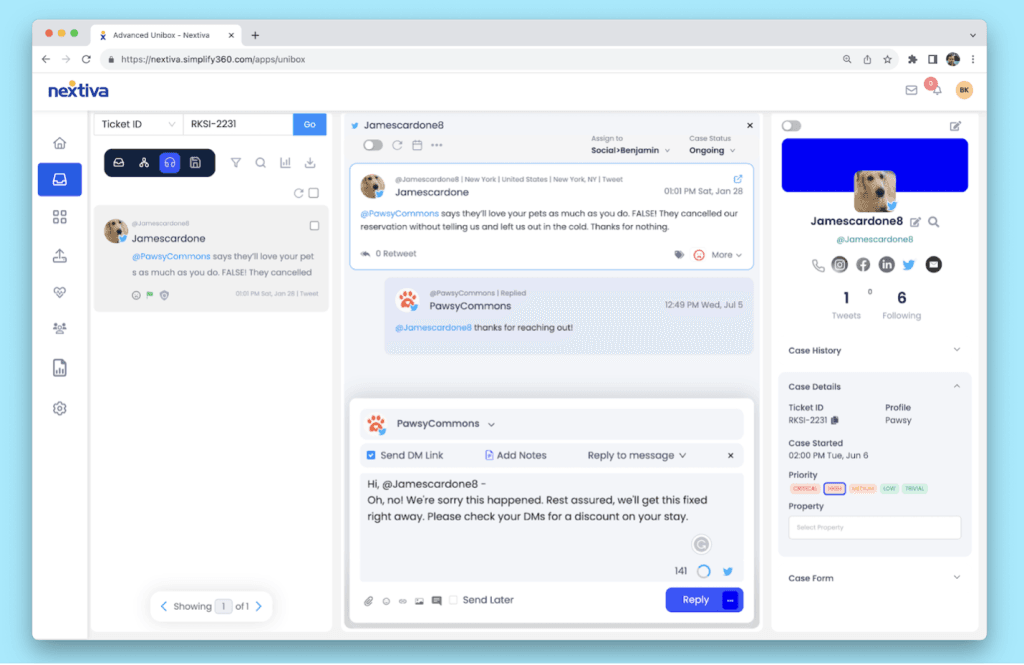
Nextiva brings customer conversations from different channels into a single inbox, which makes it easier to keep up with messages as they come in. Teams can view and respond to messages from platforms like X, Facebook and Instagram without jumping between apps. The platform also includes a shared email inbox, with options to assign messages and prioritize responses for support teams.
We also liked the built-in tools for managing online reviews. Nextiva pulls in feedback from sites like Amazon, the Apple App Store and Yelp, so businesses can respond to online reviews without logging into each platform separately. It’s a small thing, but having everything in one place can save time during a busy day.
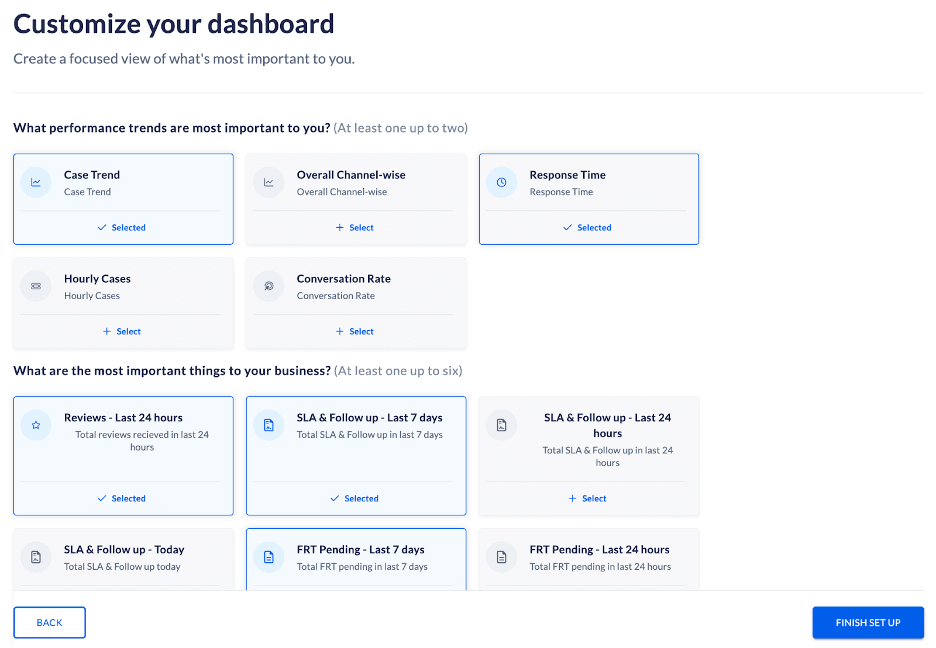
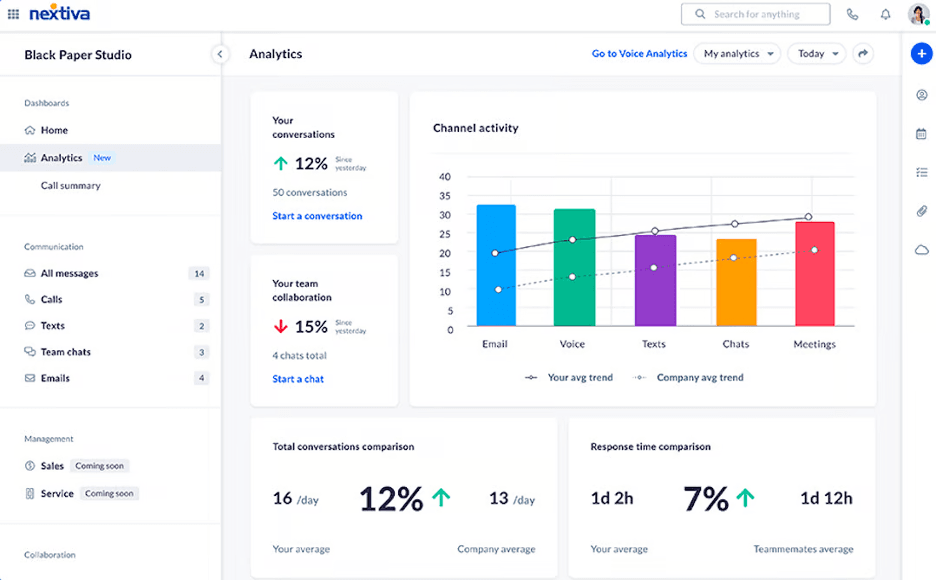
Nextiva’s dashboards give you a quick view of what’s going on across your channels without digging through reports. We set up a custom dashboard during onboarding and were able to choose which metrics to track, so the data felt relevant instead of cluttered. Once everything was in place, we could see activity, response trends and team performance on one screen, which made it easier to spot issues and keep things moving.
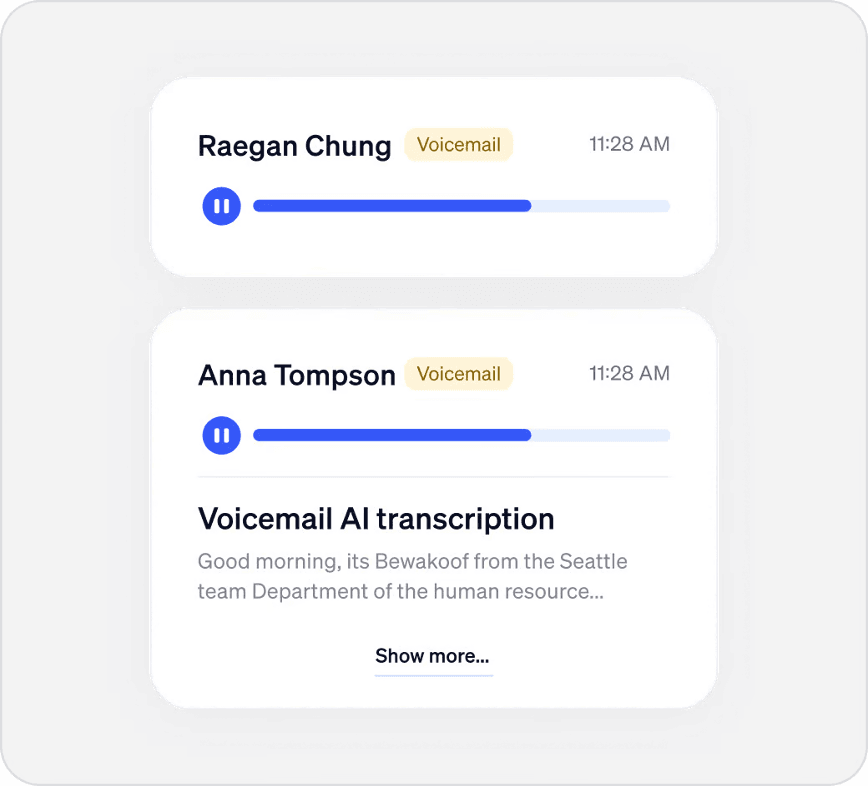
Visual voicemail is a fairly standard feature across VoIP systems, but transcription is often limited to higher-tier plans. We like that Nextiva includes this feature across all its plans, so you can scan messages instead of listening to each one. Voicemails can also trigger email or text alerts, which is helpful when you’re away from your desk.
Higher-tier plans also introduce more advanced AI features, like real-time transcription and automated call summaries, which can be useful for teams handling larger call volumes.
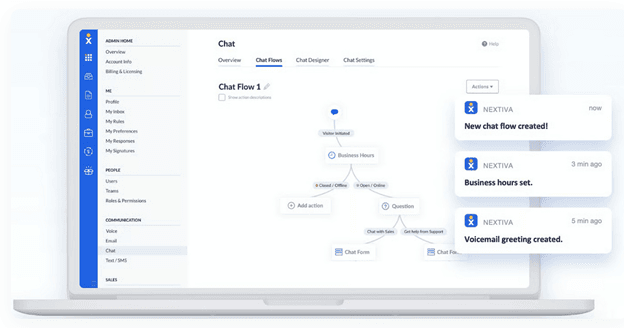
Most cloud-based PBX systems let businesses customize how calls are routed, but some make the setup harder than it needs to be. We liked that Nextiva’s standard call routing tools were fairly straightforward to work with. In NextOS, admins can build schedules around business hours, holidays and other routine changes, and different users or locations can follow separate rules.
Nextiva also includes an auto attendant, or virtual receptionist, which uses interactive voice response (IVR) to answer calls and route people where they need to go — for example, pressing 1 for sales or dialing an extension directly. If your team handles heavier call volume, higher-tier plans add more advanced routing options, including priority- and skills-based routing, to help move callers to the right person faster.
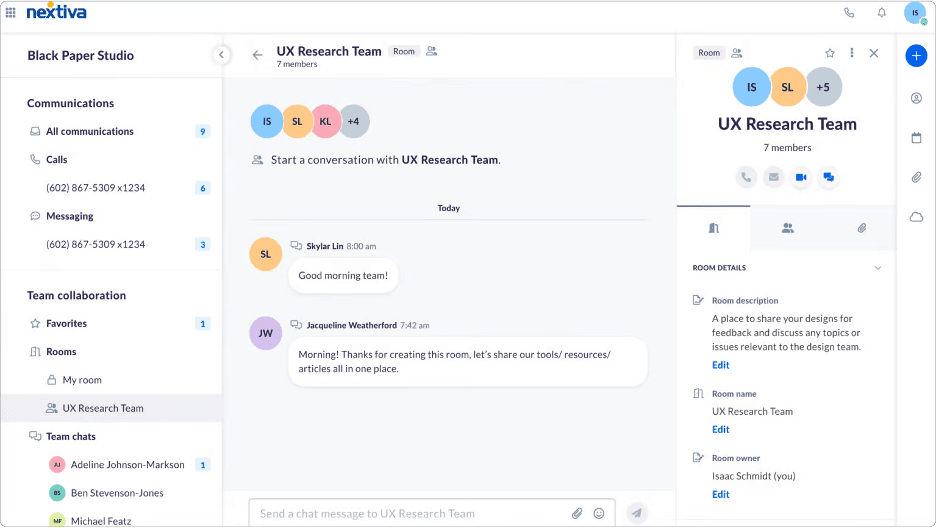
Nextiva includes team messaging spaces where employees can collaborate on projects without leaving the platform. Not every cloud phone system offers built-in chat tools, so we liked that Nextiva lets teams create shared spaces to keep conversations organized.
In our testing, it was easy to share files, start video meetings and keep everything in one place instead of bouncing between tools. That said, while these features are useful for day-to-day communication and team collaboration, they’re not as robust as what we saw from some competitors.
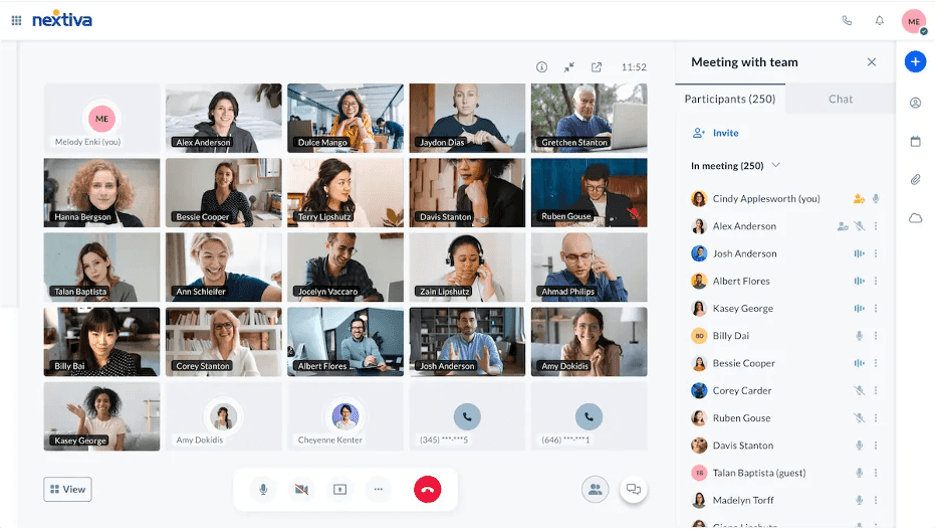
Most modern VoIP systems, including 8×8 and RingEX, include video conferencing, so teams can move between messaging, calls and meetings without switching tools. Nextiva follows that same model, with built-in video meetings available across its plans. We liked how easy it was to start a video call directly from a chat, user profile or calendar event, which keeps everything connected in one place.
That said, there are some trade-offs. Video recording isn’t available on the Core plan, which may be a drawback for teams that need to save meetings for training or documentation. Competitors like RingEX include recording across all plans, while platforms like Zoom offer more advanced video features and flexibility for larger or more presentation-heavy meetings. (Compare RingEX vs. Zoom to see how their business voice and video features stack up to Nextiva.)
Like most business VoIP systems, Nextiva gives administrators access to call logs and basic reporting tools. On the Core plan, teams can view recent call activity and use built-in dashboards to track performance at a high level, which is enough for smaller teams that just need visibility into daily operations.
As you move up to Engage and Scale plans, reporting becomes more advanced. These tiers add voice analytics, real-time dashboards and wallboards that help managers monitor performance and spot trends more quickly. On the Scale plan, Nextiva also introduces AI-powered features like real-time transcription and automated call summaries, which can provide additional context without requiring managers to review calls manually.
For businesses that need deeper insights but want to stay on a lower-tier plan, some analytics features are available as add-ons, making it possible to expand reporting without fully upgrading.
Nextiva’s business phone system offers three main pricing tiers — Core, Engage and Scale — that build on each other as your communication needs grow. The prices below reflect annual billing rates; businesses that choose month-to-month plans will pay up to 50 percent more.
Plan | Price (per user, per month, billed annually) | Best for | Key features |
|---|---|---|---|
Core | $15 | Small teams that need a reliable business phone system |
|
Engage | $25 | Growing businesses managing customer conversations across channels | Everything in Core, plus:
|
Scale | $75 | Sales and support teams that need advanced routing and analytics | Everything in Engage, plus:
|
A few additional pricing considerations include the following:
Before purchasing a multiline phone system through Nextiva, you may be prompted to connect with a sales representative, especially for higher-tier plans. You can submit a form, start a chat or call the toll-free number to learn more about pricing, features and any add-ons before signing up.
We found getting started with Nextiva to be very straightforward. We were able to complete the initial setup and start accepting calls in under 15 minutes using the NextOS onboarding wizard (Nextiva’s admin dashboard). The guided setup walks you through creating users, assigning numbers and setting basic call routing, with clear prompts at each step.
We liked that the platform automatically generates local phone numbers based on your ZIP code, while still giving you the option to choose a virtual phone number in another area. Recording a voicemail greeting and setting up call forwarding were also quick to complete during setup.
Adding employees takes a bit more time, especially if you’re building out multiple teams or locations, but the process is still easy enough. The system uses the information you enter to assign permissions and route calls to the right people or departments, such as sales or support. If you’re onboarding a larger team, Nextiva also offers bulk import tools to speed things up.
If you purchase phones directly from Nextiva, they arrive preconfigured, which makes setup even easier — just plug them in and they’re ready to go. You can also use compatible third-party devices, although setup may take a few extra steps.
During our testing, we consistently had positive experiences with Nextiva’s support team. We were able to reach a live person by phone at any time, and the agents we spoke with were patient and knew the platform well, even when we asked more involved questions.
Nextiva offers multiple ways to get help, including:
Nextiva also has the following resources for teams that prefer self-service troubleshooting:
While there’s a lot to like about Nextiva, we identified a few limitations:
We researched and evaluated dozens of business phone systems to identify the best solutions for different use cases, including customer support. Our analysis focused on pricing, features, usability, call routing capabilities, integrations, scalability and customer service options. We also reviewed product materials, participated in demos and conducted hands-on testing when possible.
To see how Nextiva handles customer support, we reached out through phone, chat and ticketing channels and paid attention to how quickly we heard back and how helpful the responses were. We also looked at user feedback and how Nextiva responds to customers across different platforms to get a sense of the overall experience.
We recommend Nextiva for …
We don’t recommend Nextiva for …