Business.com aims to help business owners make informed decisions to support and grow their companies. We research and recommend products and services suitable for various business types, investing thousands of hours each year in this process.
As a business, we need to generate revenue to sustain our content. We have financial relationships with some companies we cover, earning commissions when readers purchase from our partners or share information about their needs. These relationships do not dictate our advice and recommendations. Our editorial team independently evaluates and recommends products and services based on their research and expertise. Learn more about our process and partners here.


For many years, QuickBooks has been the leading accounting and bookkeeping solution for small businesses. We’ve continually found it to be a relatively affordable, one-size-fits-all product packed with valuable features. QuickBooks supports multiple integrations and is easy to set up and use. Based on our extensive and repeated testing, QuickBooks Online from Intuit is our pick for the best accounting software for small businesses.
QuickBooks Online is our best pick for small business accounting software because it is easy to set up, intuitive to use, includes a wide breadth of useful features and boasts 800 third-party integrations. It offers everything a small business owner needs to take control of their company’s finances within a straightforward interface that requires minimal training to get started.
QuickBooks Online is laid out in a simple, intuitive manner, enabling you to access your most important tools in just a few clicks. We loved that there were clear icons for accounting, expenses, sales, customers and more right at the top of our dashboard. We were just as happy that, within each of these modules, key functions were accessible with just one click on the left-hand side.
QuickBooks’ automation tools didn’t disappoint during our testing. We prioritized testing these features because they help reduce or eliminate the most tedious accounting tasks, like financial tracking or bank reconciliation; strong automation tools are a major time saver for busy entrepreneurs. Plus, the QuickBooks artificial intelligence (AI) suite supports needs ranging from categorizing your transactions to financial scenario planning.
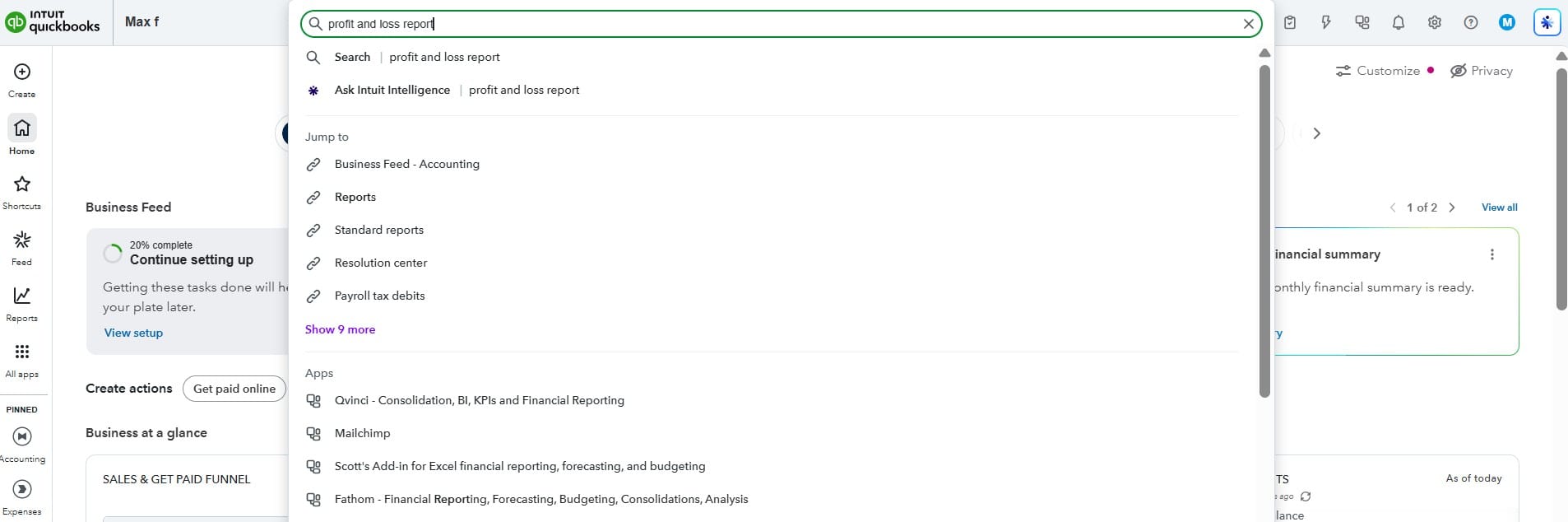
After testing QuickBooks Online, we think users will have an easy time navigating and learning the software. Although the feature-packed user interface can sometimes feel a bit busy, we found the layout intuitive. And, if we ever had troubled finding a tool or feature during our testing, searching for it usually pulled up a direct link we could follow.
QuickBooks includes data visualization tools to make it easier to understand your business’s finances. The dashboard shows your profit-and-loss data, unpaid and paid invoices, and connected bank accounts by default. We like that you can customize the dashboard to display other widgets, too; in our testing, we added widgets displaying our expenses, cash flow, and accounts payable. We clicked the “Add Widget” button directly on the dashboard, and it loaded dozens of options to choose from — a two-click process.
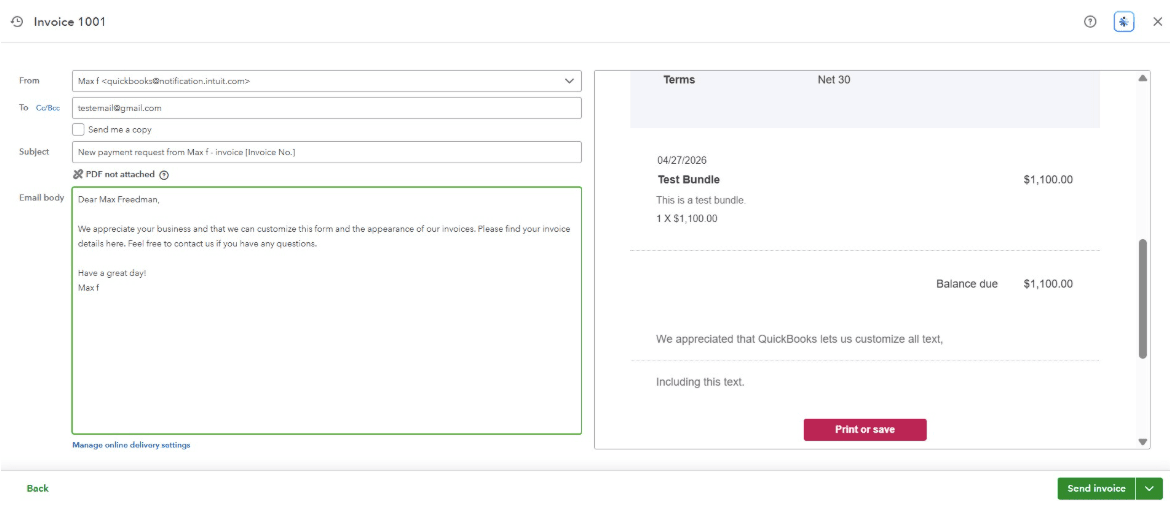
We were further impressed by how easy it is to customize invoices and forms. We were able to choose from several templates, accent colors, fonts and font sizes during our test. We also had the option to upload and position a logo or brand image. We also customized the text that appeared on our invoice and added a thank you message to our customers in the footer.
QuickBooks Online stands out among the competition for its high-level accounting software features, including the following.
Don’t know how to reconcile a business bank account? QuickBooks’ AI-powered tools import bank statements from your business checking account and credit card transactions. Then, smart reconciliation tools identify and automatically match your bank transactions with those you’ve entered into the software.
You can also create banking rules to further streamline reconciliation and categorization. We loved seeing that the software is capable of pulling vendor names from a jumble of unorganized bank data; such a feature saves you the trouble of doing this tedious work manually.
We were impressed by QuickBooks Online’s automation tools, which stand above some competing platforms we reviewed. QuickBooks can automate payment reminders and recurring invoices. It automatically backs up your data to the cloud, saving you the time it would take to perform manual backups.
QuickBooks also has machine learning-powered tools that adapt to your spending habits to better organize expenses. QuickBooks will prompt you to help fill in gaps when it isn’t sure how to categorize an expense, as well, and then remember your preferences in the future.
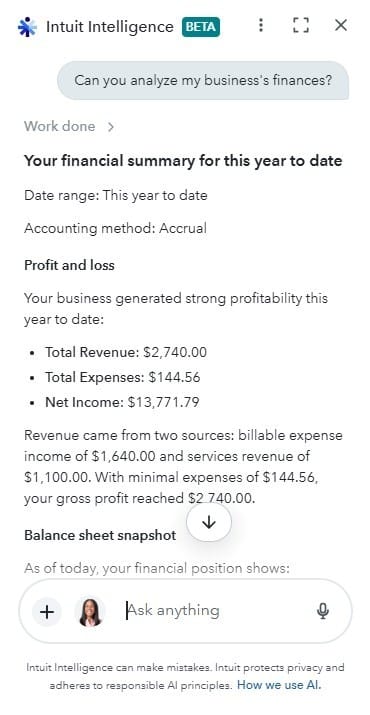
QuickBooks has done an excellent job incorporating AI functionality into its software. Intuit Intelligence can help analyze your business’s finances and answer accounting questions. The software can anticipate likely follow-up questions and provide actionable suggestions (e.g., sending reminders for unpaid invoices). It can also automate invoicing, categorize receipts, match transactions and more.
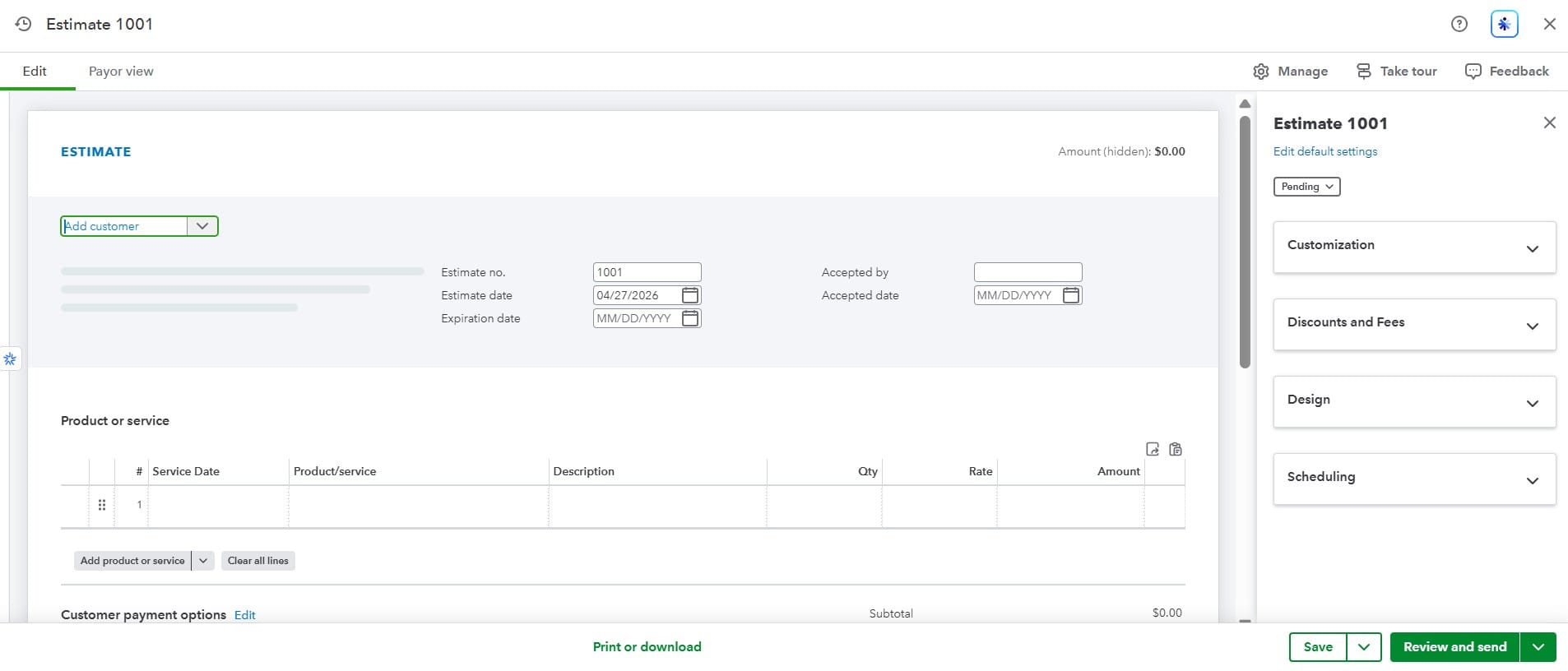
Creating professional invoices could be the difference between your business getting paid and your invoice being ignored. QuickBooks Online’s excellent invoicing functionality includes the following features.
When we tested the software, we were impressed by QuickBooks Online’s inventory features. Plus and Advanced plan users can manage inventory, vendors and create purchase orders through the accounting platform. You can add images of inventory items and bundle products or services frequently sold together, saving you from entering them on an invoice separately. You can also track inventory.
We also appreciate that the inventory app within QuickBooks alerts you when it’s time to reorder inventory. Once your inventory arrives, QuickBooks converts the purchase order into a bill. You also get on-demand reports; this feature gives you real-time insight into which products are doing well and which are underperforming.
Another plus is that QuickBooks sets your default inventory valuation method to first in, first out (FIFO), which is preferable to moving average cost (MAC). You can change this in your account settings easily, though. [Learn more about FIFO via our retail accounting guide.]
We like that QuickBooks Online’s mobile app gives you an overview of your business activity and helps you accomplish multiple accounting tasks wherever you are. The app allows you to view dashboard data, create and send invoices, and accept payments. You can also capture receipts and attach them to expenses, reconcile transactions, view customer information, and message customers. During our test run, we found the app to be one of the most powerful and extensive mobile app within the accounting software space.
QuickBooks Online also shines when it comes to report generation, outperforming many competitors. The software boasts multiple built-in reports, including aged receivables reports, general ledger reports, profit-and-loss statements, trial balance reports and balance sheets. During our test, we liked that you can set frequently used reports as favorites to make them easy to find.
The software can automatically run reports and email them to you on a custom schedule. QuickBooks also allows you to create more data visualizations in custom reports. The insights in these reports can help you leverage data analytics to make better business decisions.
During our evaluation, we discovered that QuickBooks Online’s extensive third-party integrations (800-plus) set it apart from many of its rivals. Instead of manually exporting and importing data between QuickBooks and your other business programs, you can automatically sync data between systems. QuickBooks integrates with top POS systems, popular online stores, the best CRM software, project management solutions, payroll systems and more.
We appreciate that QuickBooks Online uses bank-grade security to protect your data and that you can enable two-factor authentication. You can also set user permissions to control the access of employees you invite to the system. The software includes an audit log that tracks every login, logout and file change. These safeguards should help you prevent employee accounting fraud.
QuickBooks Online is a little pricier than many competitors we reviewed. However, its robust features and widespread accountant usage make it hard to beat for small businesses. Here’s how its plans compare:
Plan | Price | Features |
|---|---|---|
Solopreneur | $20 per month (one user) |
|
Simple Start | $38 per month (one user) | Everything in Solopreneur, plus:
|
Essentials | $75 per month (includes three users) | Everything in Simple Start, plus:
|
Plus | $115 per month (includes five users) | Everything in Essentials, plus:
|
Advanced | $275 per month (includes 25 users) | Everything in Plus, plus:
|
Here are some additional pricing considerations to keep in mind:
We really like how easy QuickBooks Online is to purchase and set up. The initial account setup questions, which cover areas including your business type and number of employees, take just a few minutes to answer. The checklist of setup tasks that appears when you first visit your dashboard is helpful too, with items covering expenses, payments, sales tax and some basic settings. It also takes just five minutes to link your bank account and credit card for reconciliation. Once you set up your account or free trial, connecting your bank account to QuickBooks takes only a few minutes.
In an age when many cloud-based software solutions overlook customer service needs, we like that QuickBooks offers its customers multiple support resources:
Although QuickBooks is an excellent accounting software solution, it has a few drawbacks to be aware of:
We investigated dozens of the best accounting and invoicing software solutions to help small business owners as they research and choose the right accounting software for their needs. We reviewed each platform’s payment and invoicing capabilities, integrations, mobile apps, report generation capabilities, supported user counts, and customer service. We also assessed pricing and free trial availability.
Our information sources included vendor websites and our own hands-on software demos. We also considered customer reviews for independent opinions on things like customer service. When determining the best accounting software for small businesses generally, we specifically focused on three things: value, user-friendliness and how the software’s features would make small business owners’ lives easier. (Learn more about our editorial process.)
We recommend QuickBooks Online for …
We don’t recommend QuickBooks Online for …
Max Freedman and Amanda Hoffman contributed to this article.
